

JFK (1991)
Deep State of the Union

Good evening my simple, country assembly of our peers, and welcome back to ILTBTA. Tonight, we will present for the audience, I mean, the jury, the case of the mysterious circumstance surrounding the assassination of John F. Kennedy. We will present the facts as we see them, we will tear down the “official” story, and we will ultimately let you decide. But we think if you read on, we know where you’ll land. 😉
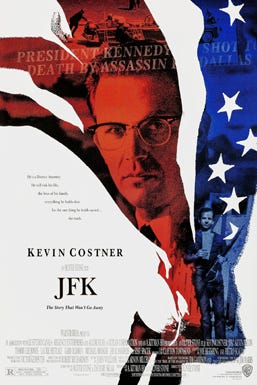
Previews
What, if anything, did we know about this coming attraction before we watched it?
Ellen: I’m assuming this is a biopic about, you guessed it, President John F. Kennedy!
Tyler: I’ve heard of this and know it’s really long, but don’t know much else. I assume if it was centered around the man himself I would’ve at least heard of which actor played him (especially if it got nominated for Best Picture), so it must be about either his assassination or the Cuban Missile Crisis or something else JFK-related. Let’s find out!
Plots & Feelings
This one’s pretty self-explanatory.
Short Version (courtesy of IMDb): New Orleans District Attorney Jim Garrison discovers there’s more to the Kennedy assassination than the official story.
Long Version (modified from Wikipedia and formatted to fit your screen):
Let’s open with a history lesson, shall we? President Eisenhower’s farewell address warns about the build-up of the military-industrial complex, and the warning is not that it can never be too big or profitable. He is succeeded by John F. Kennedy, whose time in office is marked by the Bay of Pigs Invasion, the Cuban Missile Crisis and the Indochina wars until his assassination in Dallas on 11/22/631. The details of the murder are presented as they were known at the time, with Lee Harvey Oswald being arrested for the murder of police officer J. D. Tippit and then arraigned with both murders before ultimately being killed by nightclub owner Jack Ruby.
Ellen: Rarely has my perception of what a movie was about been disproven so quickly! We basically speed-ran JFK’s presidency and death.
Tyler: I found the newsreel footage montage surprisingly effective at table-setting! I also got a kick out of Martin Sheen narrating the opening, several years before he “became” president himself.
Reactions around the country are … mixed. In New Orleans, District Attorney Jim Garrison is horrified, and his team begins to investigate potential NOLA links to the assassination, given that Oswald lived in the city prior to his time in Dallas. Private pilot, activist, and all-around weirdo David Ferrie is on their radar, but they don’t learn anything concrete. Their investigation is publicly rebuked by the federal government and Garrison closes it.
Ellen: Kevin Costner’s “oh no!” when news of the assassination hits is some of the worst acting we’ve seen for this newsletter. Tyler and I both laughed out loud.
Three years later, Garrison reopens his investigation because he is thoroughly unimpressed with the efforts put forth in the Warren Report. He is particularly skeptical of inconsistent witness statements, the single-bullet theory, and Oswald’s seemingly unfettered ability to move between the US and Russia and specialized training. It’s almost as if he were an Intelligence asset! This theory comes to us as several do: Garrison is unspooling supposition after inference after implication to someone who cannot follow the metaphorical red string, Garrison huffs about having to spell it out for them, and then he explains himself. Your authors salute these brave audience stand-ins, chief among them Garrison’s wife Liz. 🫡
Tyler: Garrison has big “Don’t you see?!” energy and it’s not not exhausting.

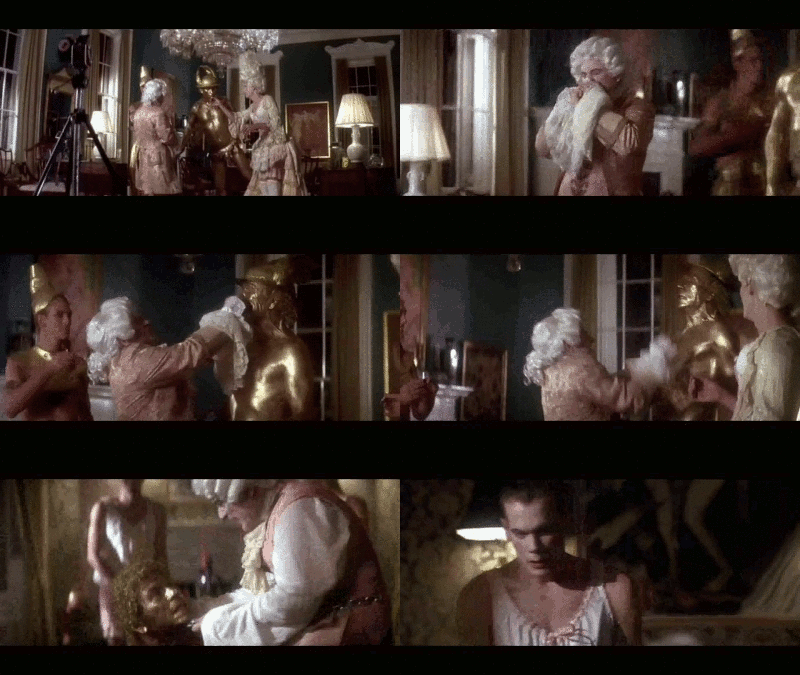
Garrison and his team interrogate people in New Orleans associated with Oswald and Ferrie. They learn that these men were (possibly?) involved in Operation Mongoose, a CIA joint involving running guns from Dallas to NOLA to Miami. Pulling this thread also leads them to Willie O’Keefe, a male escort serving in prison for solicitation. He reveals that he witnessed Ferrie talking with a “Clay Bertrand” about assassinating Kennedy, and that he briefly met Oswald. Tying this all together, Garrison believes that Oswald was a CIA operative involved in a wider plot to kill Kennedy who was then betrayed to take the fall.
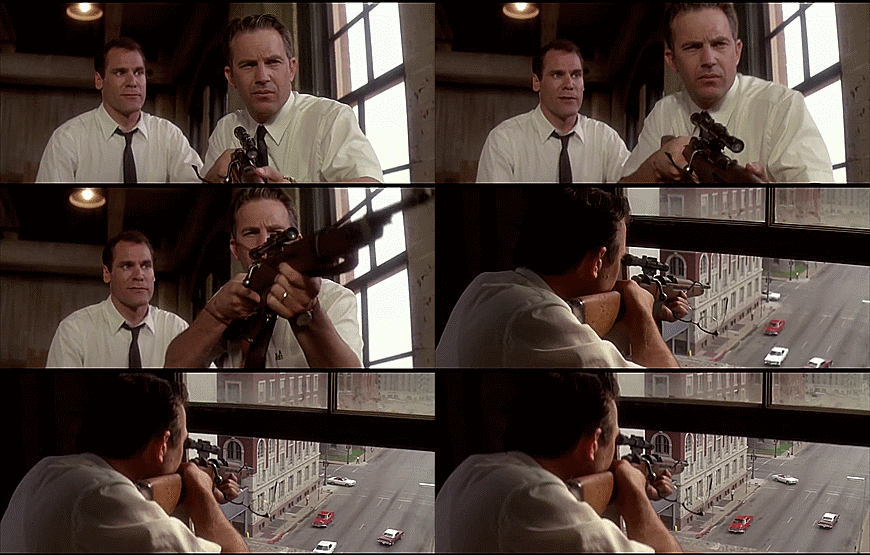
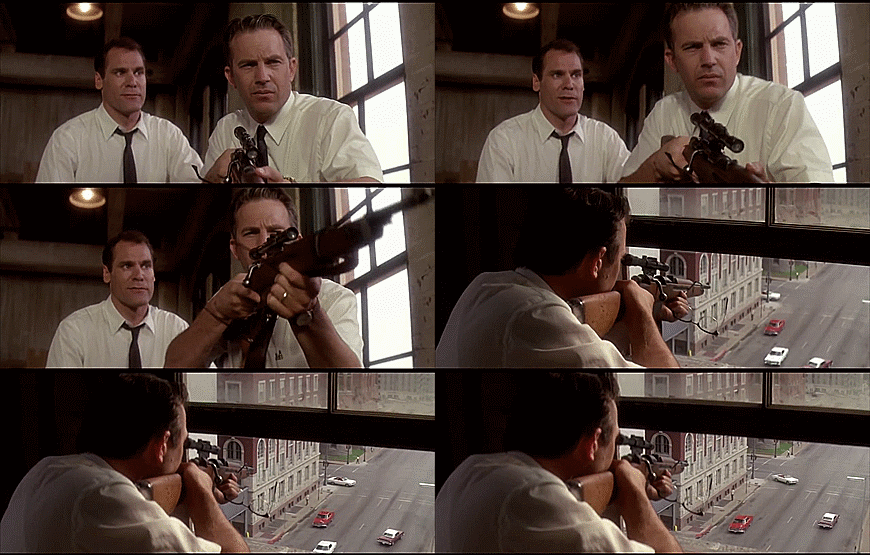
As previously stated, Garrison finds the depositions in the Warren Report to be lacking, so he goes and interviews a bunch of those people himself. Among them is Jean Hill, who says she witnessed a gunman shooting from the “grassy knoll,” but Secret Service threatened her into saying three shots came from the Texas School Book Depository (where Oswald was). By interviewing more witnesses, analyzing the route, and climbing up to the sixth floor of the Depository to play with (unloaded) guns, the boys conclude that Oswald was too poor a marksman to make the shots, and that there was more than one shooter.
Now this next part could all be a coincidence but, come on, what movie are you watching? Garrison comes to believe that “Bertrand” is really New Orleans businessman Clay Shaw. Garrison interviews Shaw, who denies having ever met Ferrie, O’Keefe or Oswald. Shortly thereafter, Jack Ruby and Ferrie both die in suspicious circumstances. Before his death, Ferrie asserts that the CIA and the Mafia were working together to kill Fidel Castro, and that there was a conspiracy to kill Kennedy.
Tyler: Are you, dear reader, slightly confused by all this? Join the club. This is a subject matter (and thus movie) that literally demands your attention given the intricacies.
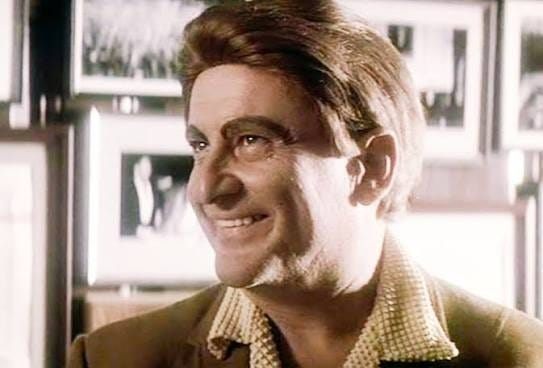
Ellen: At least when Ferrie is gone, we get acknowledgement that the toupee was supposed to look bad. Also, there are so many wild characters in this thing. We haven’t even talked about Southern-fried John Candy!
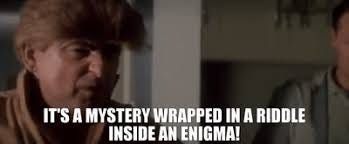
What else is there to do but for Garrison to go into the belly of the beast, to enter The Swamp itself: Washington D.C., baby! He meets up with a high-level figure in Washington D.C. who identifies himself as “X” and who claims Kennedy’s security in Dallas was deliberately neglected. He also suggests a coup d’état at the highest levels of government, implicating (to varying degrees) members of the CIA, the Mafia, the military-industrial complex, Secret Service, anti-Castro Cubans, the FBI, and then-Vice President Lyndon B. Johnson2. X suggests that Kennedy was killed because he wanted to pull the United States out of the Vietnam War, halt further actions against Cuba, and dismantle the CIA. He encourages Garrison to keep digging without providing material help. Thanks, bud.
Tyler: The entire scene with X comes together really really well with Donald Sutherland’s pitch-perfect acting and voiceovers, the editing jumping around just the right amount to help you follow what he’s saying, and the score just building and building to keep sucking you deeper down the rabbit hole.
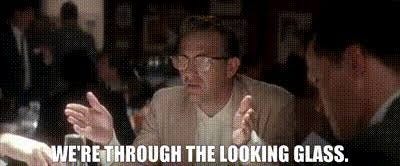


While all of this is happening, Garrison’s home life suffers greatly. His marriage is strained, his children are being threatened, parts of his staff are losing faith, and public opinion seems to be that he’s wasting taxpayer money to investigate a conspiracy theory. This is also the only place for me to mention that Garrison has a golden retriever named Touchdown. He is a good boy.
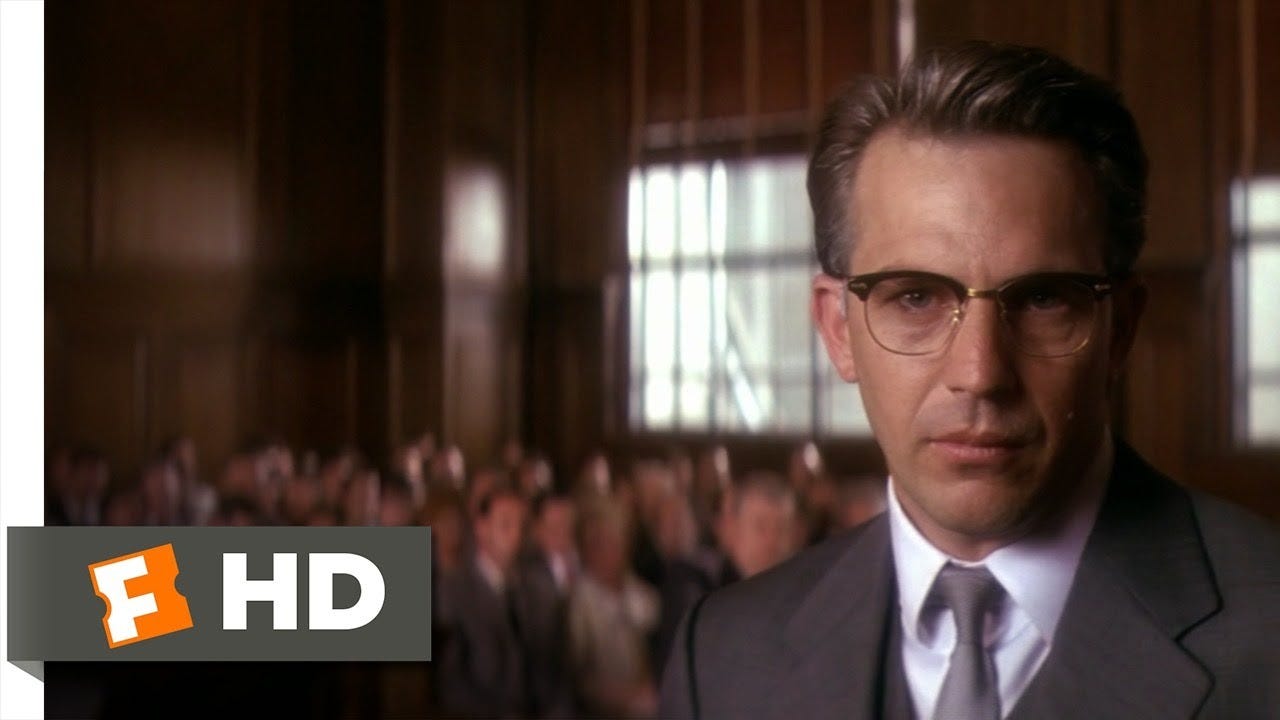
It’s go time, people. Garrison indicts Shaw for conspiring to kill Kennedy. The trial takes place in 1969, and it’s bananas. Garrison presents the court with a dismissal of the single-bullet theory, proposing a scenario involving three assassins firing six shots and framing Oswald for the murders of Kennedy and Tippit, all for the purpose of installing Johnson as president so he could escalate the war in Vietnam and enrich the defense industry. However, the jury acquits Shaw after less than one hour of deliberation. While his prosecution has failed, Garrison wins his wife and children’s respect for his determination and so repairs his relationship with his family.
Ellen: Garrison’s closing statement works through the whole conspiracy as he understands it, lasts 22 minutes of film time, and then he looks straight to camera and says “it’s up to you.”

Intermission
Even though ILTBTA is free, please indulge us further and enjoy this quick “advertisement.”
This installment of ILTBTA is brought to you by … The Deep State!
Picture this: you’re late for work again because you slept through your alarm, and now your boss is mad at you (again). But you don’t want to take personal responsibility, because that’s admitting weakness. Lucky for you, The Deep State exists! With The Deep State, just tell your boss that a shadowy cabal of government insiders disabled your alarm to make you oversleep. Problem solved!
Thanks to The Deep State, you no longer have to do any sort of that pesky critical thinking or self-evaluation, just blame the sinister government administrative state, a massive organization well-known for its efficiency and ability to keep secrets. Use promo code ILTBTA next time you want to blame something you can’t quite explain and get a free tinfoil hat!
The Deep State: at least we’re not the military-industrial complex!
Wiki-Wiki-Whaaat?
Love a good Wikipedia rabbit hole in search of some fun facts? Us too.
JFK’s Wikipedia page has some interesting facts and anecdotes that we recommend you read through, but here are a few of our favorites:
JFK was based on Jim Garrison’s quasi-memoir On the Trail of the Assassin and journalist Jim Marrs’ Crossfire: The Plot That Killed Kennedy. Director Oliver Stone was handed the manuscript in an elevator at the Havana Film Festival and got a literal elevator pitch from a rep from the book’s publisher. Stone later said of the film:
“There are many flaws in the real Garrison (arrogance and paranoia, to name a couple), but we did not deal with them in the film, because you either had to make Garrison the issue or make Kennedy the issue. I chose Kennedy.”
Tyler: This movie was three hours long, I think you had enough time to make your protagonist a little more of “the issue.”
Ellen: I guess he is ultimately portrayed as righteous, but he at least is not portrayed as perfect.
Tyler: True, though in the end he’s essentially forgiven by all the major people he’s wronged, thereby justifying (in the movie’s eyes, in my opinion) his prior actions.
Prior to writing On The Trail of the Assassin (his third of three books), Garrison was replaced as District Attorney by Harry Connick, father to singer/actor Harry Connick Jr.
In what was surely a comically ironic choice by Stone given the film’s distrust of the Warren Report, Garrison played Chief Justice Earl Warren in two scenes in JFK.
Beverly Oliver, the woman who claimed to be the “Babushka Lady” in the famous Zapruder film of the assassination, also had a small part as a dancer in Jack Ruby’s club.
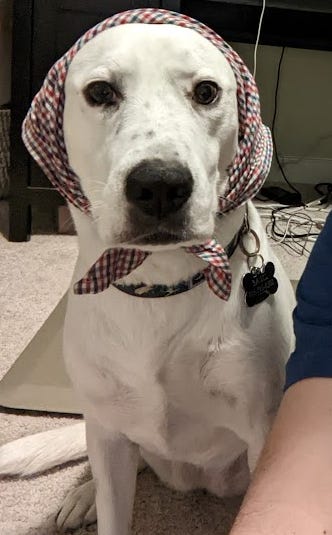
In addition to Oliver (whose claim is heavily disputed), Stone also relied on … characters like L. Fletcher Prouty, a controversial (to put it lightly) guy who partly inspired the Mr. X character and was once described as “a complete nut.”
In casting the film, Stone sought to replicate the large cast of well-known actors from previous ILTBTA subject The Longest Day, a film he enjoyed watching as a child.
Oscar NomNomNomz
Since we all know a movie is nothing without the food and drink it incorporates.
It’s now time to award the Oscar for Best Snacktor in a Supporting Role3. And the nomnomnominees are:
Molasses pie, as thick as old friends from law school
Dead meat, specifically crab meat at a NOLA restaurant
The Big Enchilada, who shall remain nameless
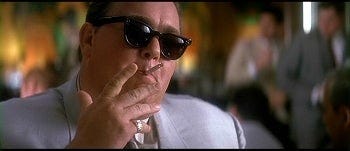
And the Oscar goes to … The Big Enchilada! Unfortunately, Southern-fried John Candy betrayed us to protect its identity, so we will accept this award on its behalf.

Fill In The Blank
How did we really feel about The Academy nominating this?
Ellen: I’d like to have The Academy give Oliver Stone a hug and say, “you got it out, bud, good job.” I think this movie is very interesting and it feels very personal to Oliver Stone, but I’m not convinced that it was good. There’s just SO MUCH he is trying to get through that he flings information at the audience rapid-fire, using monologues and relentless quick cuts to cram it all in there. It makes for a thoroughly engrossing watch, but I don’t think it’s necessarily the best filmmaking. As for the content, the movie has very little sympathy for the other side and offers only half-hearted attempts to represent it in good faith. While you can say that it's only fair when the opposition to the film's thesis is the entrenched, official version of events, it doesn't allow much of a way in for people who don't already think something is rotten in Denmark.
Tyler: I’d like to politely ask The Academy to put the red string down so that I can replace it with some popcorn instead. JFK feels like a movie that is not able to be greater than the sum of its parts and (to continue injecting some math) has its overall average rating in my mind dragged down by some pretty subpar aspects. As I mentioned in P&F, the scene with X was very well done and the high point of the movie for me. Also, Gary Oldman’s performance as Oswald was unsurprisingly the best of the bunch, and the Oscar it won for Best Editing was well-deserved.
However, I’ve never really “gotten” Kevin Costner as an actor (his constant wooden performances could make him his generation’s John Wayne), so the lead’s acting couldn’t save a protagonist who ultimately veered over the border from righteous to self-righteous. And it’d be one thing if the movie had some nuance to Garrison’s pursuit, but we were clearly supposed to believe he was the white knight with his third eye opened, actual facts and reality be damned. So while it certainly had its bright spots and made for a pretty good visual rabbit hole, I didn’t find it necessarily worthy of a Best Picture nominee on the whole.
3/5 ⭐on Letterboxd
Let The Credits Roll
Thanks for reading! Some quick housekeeping as you exit the theatre:
If you have plots and feelings of your own (on the movie or ILTBTA in general), feel free to comment on the post or simply reply to the email. If you liked reading this: tell your friends! If you hated reading this: tell your friends how much you hated it by forwarding it to them!
Since Twitter is a hellscape of hatred and Russian bots, we’ve taken our talents to Bluesky! Follow us there for alternate subtitles and even more jokes and gifs.
ILTBTA is also on Letterboxd, the social networking/movie review site for movie fans. Follow us there to read our Spreadsheet comments of our ILTBTA movies, plus our ratings of other movies we watch!
If you’d like to start a wild Best Picture journey of your own, feel free to download a copy of The Spreadsheet. Bonus: checking off the boxes is oddly satisfying.
Post-Credits Scene
Get a sneak peek at the next ILTBTA installment.
With Spider-Man: Brand New Day taking over the box office of late, we’re going full spidey (we assume) with our next post: Kiss of the Spider Woman. The 1985 drama follows two cellmates in a Brazilian prison during the country’s military dictatorship. You best believe there will be references to I’m Still Here and/or The Secret Agent. KOTSW is available to stream on HBO Max, or can be rented from elsewhere if you spent your movie money on The Odyssey IMAX tickets and not an HBO Max subscription.
Until then, IT’S UP TO YOU, DON’T YOU SEE???
P.S. Congratulations to family and friends of ILTBTA Sara and Kellen (on the birth of their baby girl) and Brad (for his recent wedding, which was an absolute blast)!
Ellen: Speaking of which, I really enjoyed the book 11/22/63! It’s a commitment, and you need to be prepared for the “of a time” sexism of Stephen King (sorry bud, you know it’s true), despite being written in the early 2010s, but dang it, he knows how to tell a story!
And also my ex-wife!
Results tabulated and certified by the accountants at Ernst & Yum™.